
Building Reputation Beyond the Codebase
This post on off page SEO is tailored for a slightly technical audience. While anyone can enjoy this, those with a basic understanding of how the Web technologies work will get better value out of this course.
You just finished a project.
The code is clean.
Your React components are modular and your Rust backend handles requests faster than a heartbeat. You pushed to production, set up your Sitemap, and waited. But the traffic never came. Your site is a ghost town because, in the eyes of Google, you don’t exist yet.
Building a great website is only half the battle. If on-page SEO is about making your site readable for bots, Off-Page SEO is about making your site trustworthy for the rest of the internet. It is the digital equivalent of word-of-mouth marketing. It tells search engines that your content is worth looking at because other people are already looking at it.
Most developers hate this part. It feels like “marketing fluff.” But if you treat it like a distributed system problem—where nodes (websites) need to verify the validity of other nodes—it starts to make sense.
Let’s break down how to build that digital authority from scratch.
- Building Reputation Beyond the Codebase
- Why Code Quality Isn't Enough
- The Core Logic of Backlinks
- Building Your Link Profile: The Strategy
- Domain Authority: The Proxy Metric
- Social Signals and the "Hacker News" Effect
- Technical Outreach: Not Your Typical PR
- The Logic of PageRank: How Juice Actually Flows
- Automating the Outreach Grind
- The Role of Niche Communities
- Internal vs. External: The Balancing Act
- Link Reclamation: Getting What You're Owed
- The Future of Off-Page in the AI Era
- Technical Debt in SEO
- The "Skyscraper" Technique for Developers
- Collaborative Content: The Power of Interviews
- Monitoring Tools: Beyond the Basics
- The Final Technical Checklist
Why Code Quality Isn’t Enough
Google uses over 200 ranking signals. Many of them happen outside your server. Think of it like a peer-review system for the web. If you write a research paper but nobody cites it, did it even happen?

Search engines look for “votes” from other sites. A link from a high-authority site like CSS-Tricks or Smashing Magazine is a massive vote of confidence. A link from a random, low-quality spam blog is a red flag. You need quality votes to rank for competitive keywords. Without them, your technical optimizations are just screaming into a void.
The Core Logic of Backlinks
Backlinks are the currency of the web. They are pointers. When Site A links to Site B, it passes along something SEOs call “link equity” or “link juice.”
Not all pointers are the same. If a site with a high Domain Rating (DR) links to you, it passes more equity than a brand-new site. It is a transitive property of trust. If I trust Site A, and Site A trusts you, I probably trust you too.
Dofollow vs. Nofollow: The Technical Difference
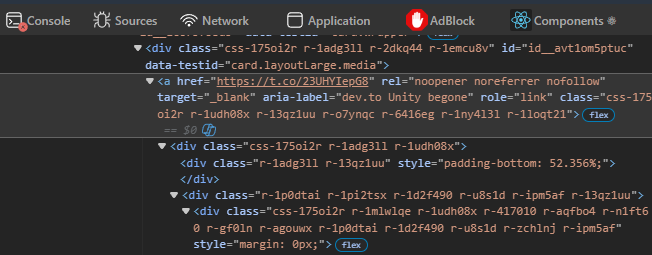
As a dev, you need to know the attributes. By default, every link is "dofollow". This means search engine crawlers will follow the link and pass authority to the destination.
<a href="https://yourtechblog.com">Great Developer Blog</a>
However, sometimes you don’t want to pass authority. Maybe it’s a paid ad or a user-generated comment. That’s where rel="nofollow” comes in.
<a href="https://spamsite.com" rel="nofollow">Spammy Comment</a>
In recent years, Google added rel="ugc" (User Generated Content) and rel="sponsored". Using these correctly keeps you in Google’s good graces. If you build a platform where users can post links, always use rel="ugc". It protects your site’s reputation.
Building Your Link Profile: The Strategy
You can’t just buy links.
Well, you can, but it’s a quick way to get your domain blacklisted.
You need to earn them. For a developer, this is actually easier than it is for a general blogger. You have skills people want.
1. The Power of Open Source
One of the best ways to get high-quality backlinks is through GitHub. When you create a popular repository, people link to it from their blogs, documentation, and README files.
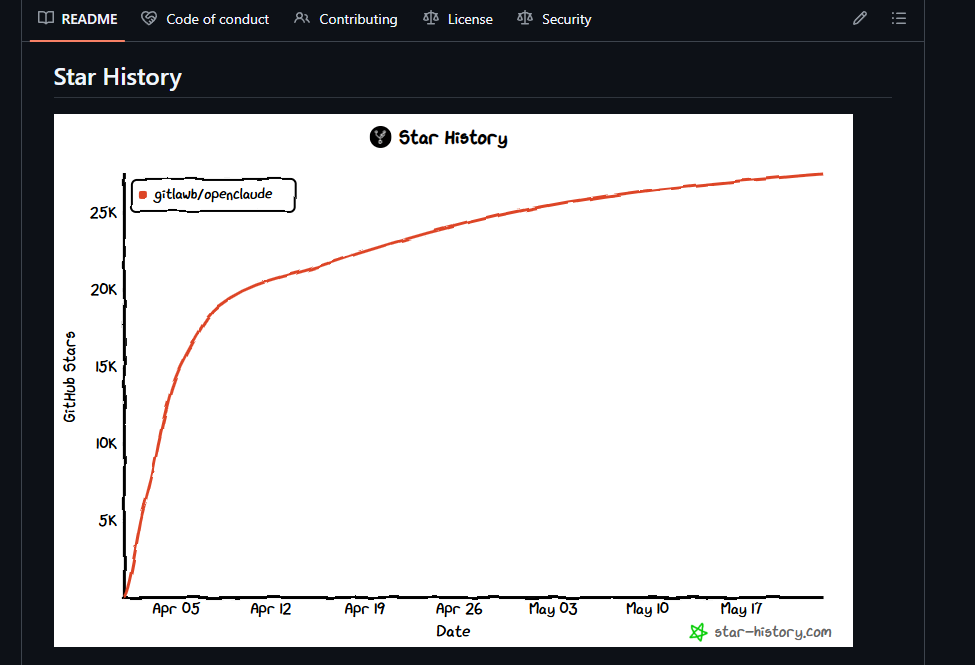
Even better? Contribute to major projects. When you fix a bug in a popular library, your name (and often a link to your site) ends up in the contributors’ list. These are high-authority, contextually relevant links. Google loves them.
2. Documentation and Tooling
Write better documentation than the official source. I’ve seen solo devs rank higher than the library they are writing about because their “Getting Started” guide was clearer.
Build small, free tools.
A CSS grid generator, a JSON to TypeScript interface converter, a gaming portal or a RegEx tester. These tools are “link magnets.” People book-mark them and share them on Reddit and Twitter.
Each share is a potential backlink.
3. Guest Posting for Peers
Find blogs that your audience reads. Reach out to the editors with a technical pitch.
Don’t send a generic “I want to write for you” email. Send a “I saw your post on Kubernetes and I can write a follow-up on optimizing pod density” email.
When you guest post, you usually get an author bio link. That link is worth its weight in gold if the site has a high DR. It places your name next to established experts.
I have a detailed guide on Guest Posts here.
Domain Authority: The Proxy Metric
Google doesn’t actually use a “Domain Authority” score. That is a metric created by third-party companies like Moz or Ahrefs to guess how Google sees you.
While it’s not an official Google metric, it is a great proxy. If your site has a DR of 10 and your competitor has a DR of 70, you are going to lose every time, even if your content is slightly better. You need to bridge that gap.
How to Increase Your Authority
- Get links from diverse domains. Ten links from ten different sites are better than 100 links from one site.
- Focus on relevance. A link from a small dev blog is better than a link from a massive gardening site, assuming you write about technology. The reverse is true if you are actually into gardening.
- Clean up broken links. Use a tool to find sites that are linking to 404 pages on your site and ask them to update the link. This is the easiest link building you’ll ever do.
Social Signals and the “Hacker News” Effect
Does a tweet help your SEO? Directly, no. Social links are almost always "nofollow".
However, social media drives traffic. If your post hits the front page of Hacker News or goes viral on tech Twitter, thousands of people see it. Some of those people are bloggers. Some are journalists. They see your content and link to it from their own sites.
Social signals are the spark that starts the backlink fire. Don’t ignore them just because they don’t pass direct “juice.”
Tweet
Technical Outreach: Not Your Typical PR
Most outreach is spam. We’ve all seen those “Dear Webmaster” emails. They go straight to the trash.
Technical outreach is different. It’s about being helpful.
Try the Broken Link Building method. Find a popular tutorial in your niche that is a few years old. Check if any of the external resources it links to are dead. If they are, email the author.
"Hey, I was reading your post on React Hooks. I noticed the link to the official examples is broken. I actually wrote a modern version of that guide. Might be a good replacement for your readers."
You are solving a problem for them. They get a working link, and you get a backlink. It’s a win-win.
The Logic of PageRank: How Juice Actually Flows
We need to talk about the math. PageRank was the original algorithm that made Google famous. It treats the web as a graph. Each page is a node, and each link is an edge.
When a page links out, it divides its equity by the number of links on the page. If a high-authority page has 100 links, your “slice” of juice is tiny. If it only has two links, you just struck gold.
As a developer, you can use this to your advantage. Don’t just hunt for big names. Look for pages with high authority but few outbound links. That’s where the real power is hidden.
This is no longer authoritative. There have been numerous updates to Google Search and there will be more! However, the fundamentals remain the same.
Anchor Text: The Metadata of Links
Anchor text is the clickable text in a hyperlink. It tells Google what the destination page is about.
If someone links to you with the text “click here,” it doesn’t help much. But if they link with “React performance optimization guide,” Google associates your site with those keywords.
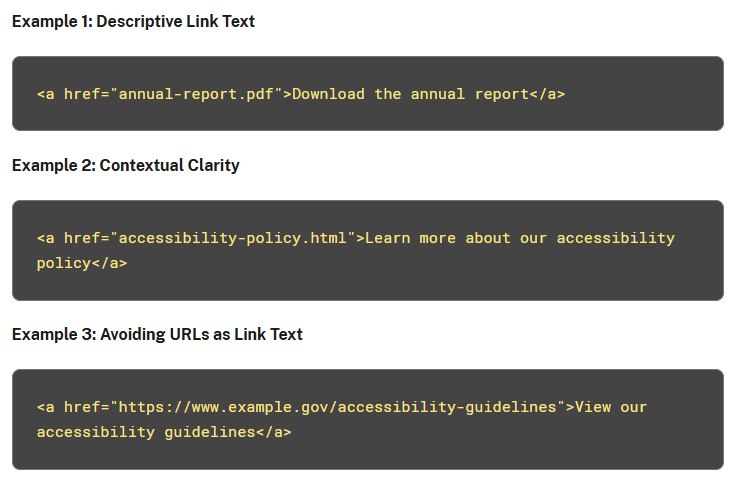
Be careful, though. If every single link to your site has the exact same anchor text, Google suspects manipulation. You want a natural mix:
- Branded: “The Code Post”
- Naked URL: “thecodepost.org”
- Keyword Rich: “SEO for developers”
Generic: “read more”
Automating the Outreach Grind
Since you know how to code, don’t do outreach like a marketer. Use the tools at your disposal.
You can write a simple Python script using BeautifulSoup to scrape niche blogs and check for broken links. Or use an API like Ahrefs or Moz to find domains that are mentioning your competitors but not you.
Scripting the Search
Imagine searching for mentions of your project on Reddit. You can use the Reddit API to trigger a Discord notification every time a specific keyword is mentioned. This allows you to jump into conversations early, provide value, and occasionally drop a helpful link where it makes sense.
Just remember: automation should help you find opportunities, not spam them. The actual outreach email should always be written by a human. People can smell a template from a mile away.
The Role of Niche Communities
Places like Stack Overflow, Discord, and Slack communities are often overlooked for SEO because the links are usually nofollow. But they are often where your actual users live.
If you become a top contributor on Stack Overflow for a specific tag (like typescript or next.js), you build an "entity" authority. Google sees that your name is consistently associated with high-quality technical answers.
When you eventually publish a deep-dive blog post on your own site, those community members are the first ones to share it, leading to those all-important dofollow links from other blogs.
Internal vs. External: The Balancing Act
Off-page SEO doesn’t happen in a vacuum. It works in tandem with your internal link structure.
When you get a big backlink to your homepage, you need to use internal links to push that “juice” down to your deeper articles. This is called “link siloing.”
If your homepage is a powerhouse but your technical tutorials are five clicks away with no internal links, they will never rank. Map out your site as a hierarchy. Ensure your most important content is only one or two clicks away from the pages that receive the most external links.
Link Reclamation: Getting What You’re Owed
Sometimes people use your code snippets, your images, or your ideas without giving you a link. This is common in the dev world.
You can use Google Image Search or tools like TinEye to find where your diagrams are being used. If someone is using your infographic about “The Fetch API” but hasn’t linked back to the source, send them a friendly note.
"I’m glad you found my diagram useful for your post! Would you mind adding a quick source link back to the original article? It helps me keep the content updated for everyone."
Most of the time, it’s just an oversight. People are happy to give credit when asked nicely.
The Future of Off-Page in the AI Era
Google is changing.
With Search Generative Experience (SGE) and AI overviews, the way people find information is shifting.
Does this make off-page SEO irrelevant?
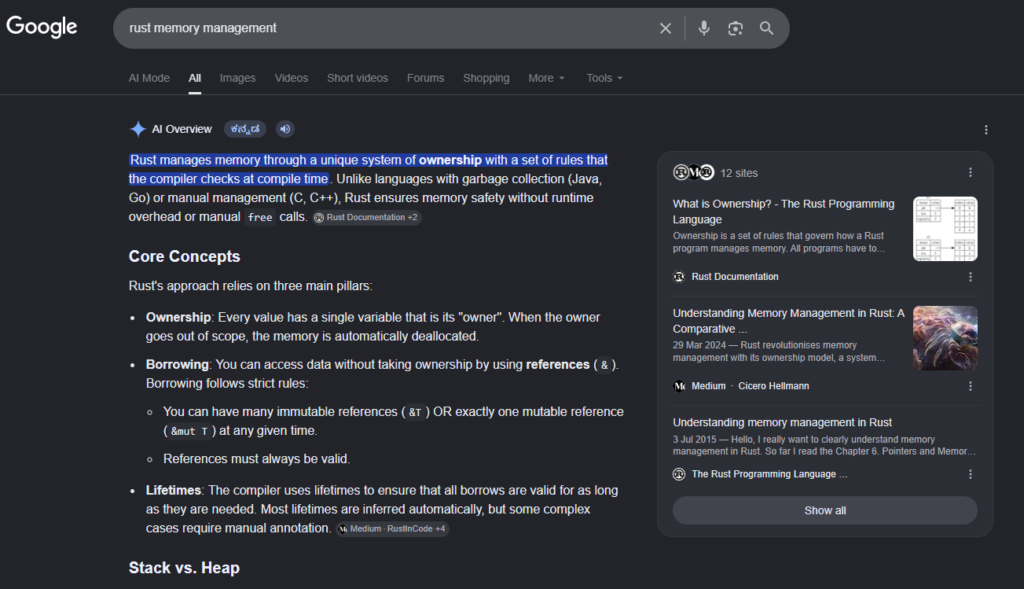
Quite the opposite. AI models are trained on the web. They prioritize sources that are frequently cited and trusted by others.
If your site is the one that everyone else is linking to as the definitive source on “Rust memory management,” the AI models will likely use your content as the basis for their answers—and provide a link to your site as a citation. Off-page authority is becoming the filter for the AI-driven web.
Technical Debt in SEO
Just like you can accumulate technical debt in your codebase by using “quick and dirty” hacks, you can accumulate SEO debt.
Buying a pack of 5,000 links on Fiverr might give you a temporary boost. But it’s a high-interest loan that Google will eventually collect on. When the penalty hits, you’ll spend ten times more effort trying to recover your domain than you would have spent building it the right way.
Always think about the long-term maintainability of your link profile.
Is this link going to look good in two years?
If the answer is no, don’t do it.
The “Skyscraper” Technique for Developers
This is a classic SEO strategy that works incredibly well for technical topics.
- Find a technical post in your niche that has a lot of backlinks but is outdated (e.g., “Setting up a Node server in 2018”).
- Build something better. Write the 2024 version. Add better code examples, a video, and a downloadable boilerplate.
- Reach out to everyone who linked to the old version and let them know about your updated resource.
Because you are offering something objectively better, your success rate will be much higher than with cold outreach.
Collaborative Content: The Power of Interviews
You don’t have to write everything yourself.
Interview other developers. Ask them about their stack, their challenges, and their advice for juniors.
When the interview goes live, the person you interviewed will almost certainly link to it from their own site or share it with their network. This is one of the most natural ways to build authority and relationships at the same time.
Monitoring Tools: Beyond the Basics
You need to know where you stand.
- Google Search Console (GSC): This is the only source of truth. Check the “Links” report to see exactly which domains Google knows about.
- Ahrefs/Semrush: These are the heavy hitters. They have their own crawlers that are nearly as fast as Google’s. Use them to analyze your competitors’ backlink profiles.
- Monitor Backlinks: A simpler tool that sends you an email whenever you gain or lose a link.
For a dev, I recommend getting familiar with the Ahrefs API. You can build your own custom dashboards to track your “Link Velocity”—how fast you are gaining new links compared to your competition.
Bonus: Local SEO
If you are providing products or services in specific areas, you must put some effort to improving your local visibility. Check this guide on Local SEO and how to set everything up from scratch.
The Final Technical Checklist
If you want to win at Off-Page SEO, follow this loop:
- Audit: Use GSC to see who links to you now.
- Fix: Reclaim broken links and disavow malicious spam.
- Create: Build link magnets (tools, deep-dives, OS projects).
- Connect: Reach out to peers with genuine value.
- Repeat: SEO is an iterative process.
Stop thinking of yourself as just a developer.
You are a creator. And creators need an audience. Building your off-page authority is how you make sure that audience can actually find the amazing things you build.
So, go ahead. Open up a new tab. Find one site that would benefit from your knowledge. Send that first email. Your search rankings will thank you later.
